
Who decides
The people in the room.
Two bodies will shape whether — and how — drones and other surveillance come to Detroit: the City Council and the Board of Police Commissioners. Here's who they are, what the public record shows, and how to reach them. Where someone has no documented position, we say so plainly.
Detroit City Council
Holds the contract and the budget
Detroit's City Council changed in the November 2025 election: Mary Sheffield was elected Mayor (the city's first woman mayor), and two open seats were filled by Renata Miller (D5) and Denzel McCampbell (D7). James Tate was chosen Council President (5–4) and Coleman Young II President Pro Tem. The Council holds the binding vote — and the budget — on any surveillance contract under the CIOGS ordinance.
Police matters are vetted first by the Public Health & Safety Standing Committee — chaired by Gabriela Santiago-Romero, with Denzel McCampbell as vice chair and Mary Waters as a member (President Tate sits ex-officio). It meets Mondays at 10am. That committee is the earliest place a drone or surveillance proposal would surface.

James Tate
District 1 · Council President
Voted for the 2020 facial-recognition contract and 2023 plate-reader expansion; favors a public process on drones. Voted against the 2026 data-center moratorium (objected to its length).

Angela Whitfield-Calloway
District 2
Voted AGAINST the 2022 ShotSpotter expansion but FOR the 2023 plate-reader expansion. No documented position on drones.
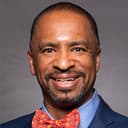
Scott Benson
District 3
Voted for the 2023 plate-reader expansion; seated for the 2021 CIOGS ordinance. Sponsored the 2026 data-center moratorium.

Latisha Johnson
District 4
Voted AGAINST the 2023 plate-reader expansion, saying the city already had adequate coverage. Spoke for the data-center moratorium.

Renata Miller
District 5 · Newly elected
Won the seat Mary Sheffield vacated; UAW retiree. Campaigned on expanding neighborhood policing; no documented position yet on surveillance technology.
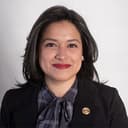
Gabriela Santiago-Romero
District 6 · Public Safety chair
Among the council's clearest skeptics: voted against the 2022 ShotSpotter renewal and 2023 plate-reader expansion; presses DPD on data access and ICE sharing.

Denzel McCampbell
District 7 · Public Safety vice chair
Documented critic; campaigned against over-policing and surveillance. Requested a report on whether city contractors sell or share data.

Mary Waters
At-Large
Voted AGAINST the 2022 ShotSpotter expansion but has spoken favorably of plate readers after hearing they helped solve crimes.

Coleman Young II
At-Large · President Pro Tem
Voted for the 2023 plate-reader expansion and against the 2026 data-center moratorium. Other surveillance positions not documented.
The executive branch
Who requests it — and who would run it
Mayor Mary Sheffield
Detroit's first woman mayor · sworn Jan 2026
Mary Sheffield — sworn in January 2026 as Detroit's first woman mayor, after eight years on the City Council, the last as Council President — runs the departments that would operate a drone or camera program, and her administration negotiates the contracts the Council then votes on. Her office said it is “fully vetting” the Council's data-center moratorium request and has not taken a public position; we found no on-record statement from her specifically on police surveillance technology.
Chief Todd Bettison
Detroit Police Department
Police Chief Todd Bettison — kept on by Mayor Sheffield and confirmed as permanent chief in late 2025 — is the official driving the technology requests. He has described a Detroit police drone program as “on the road map” (roughly eight months out as of spring 2026), studied against Tampa and Philadelphia. On immigration, he said in early 2026 that DPD does not share its license-plate-reader data with ICE, and reversed a move to discipline two officers who had contacted Border Patrol.
Board of Police Commissioners
Approves how DPD uses the technology
Detroit elected a largely NEW Board of Police Commissioners in November 2025; seven members took office January 2026. The 11-member civilian board (7 elected, 4 mayor-appointed) approves DPD's use policies for technology. Because the board is new, most members have no public record yet on surveillance — we'll update as they vote. One honest caveat: the exact seated 2026 roster (especially the four mayoral appointees) was reported inconsistently across sources as the board turned over, so treat the membership below as provisional until confirmed against the city's official list.
Eva Garza Dewaelsche
Appointed · Chair
Voted YES on the 2019 facial-recognition policy (Directive 307.5) — one of only two current members who took part in that vote.
Darryl Woods
Appointed · Vice-Chair
Appointed and confirmed in 2024. No documented position on surveillance technology.
Robert Jones
Appointed
Appointed in 2025 after a long career at AT&T. No documented position on surveillance.
Henrietta Ivey
District 1 · Newly elected
Won as a write-in; longtime homecare worker and labor advocate. No documented surveillance position yet.
Lavish T. Williams
District 2 · Newly elected
Took office January 2026. No documented surveillance position yet.
Darious Morris
District 3 · Newly elected
Took office January 2026. No documented surveillance position yet.
Scott Boman
District 4 · Newly elected
Took office January 2026. No documented surveillance position yet.
Beverly J. Watts
District 5 · Newly elected
Won as a write-in. No documented surveillance position yet.
Lisa Carter
District 6 · Re-elected
Serving a fourth term; the only sitting elected member who voted on the 2019 facial-recognition policy — she voted YES.
Victoria Camille
District 7 · Newly elected
Describes herself as a police-accountability organizer; no recorded surveillance vote yet.
Positions reflect the documented public record — votes and reported statements — as of June 2026. People change their minds, and new members build records over time; we'll keep this current. The most reliable way to know where someone stands is to ask them at a public meeting. Here's how. Official portraits: City of Detroit.
Show up when it counts
Decisions get made in rooms.
We'll tell you which room, and when.
The most powerful thing a resident can do is be present before the vote. Subscribe and we'll email you ahead of every City Council session, Police Commissioners meeting, and public hearing that shapes our city.