

Gunshot detection (ShotSpotter)
Detroit renewed its ShotSpotter gunshot-detection contract in a narrow 5–4 vote. Supporters say it helps save lives; critics point to the city's own data and a court ruling. Here's what's known, what each side says, and where to weigh in.
What you need to know
Council voted 5–4 to extend the contract ~$2M through March 31, 2027, bringing reported ShotSpotter costs to about $9 million. It's a bridge while the city evaluates bids (SoundThinking, Motorola Solutions, Eagle Protection) for a long-term system.
In peer-reviewed research on Detroit's first deployment, 2 of 5,853 alerts (0.03%) led to an arrest. In 2024–25, of 24,225 alerts, shell casings were recovered in ~12% and aid reached a victim in under 1%.
Supporters say it saves lives. A mother testified the system helped officers reach her son, shot in Brightmoor. Police credit it with helping locate victims; the city also reported record-low homicides in 2025, which it attributes to policing plus community intervention.
A Michigan Court of Appeals ruled the city approved earlier ShotSpotter contracts in violation of its own surveillance-transparency ordinance (CIOGS). Residents, represented by the Sugar Law Center and Detroit Justice Center, are seeking to void them.
What was decided
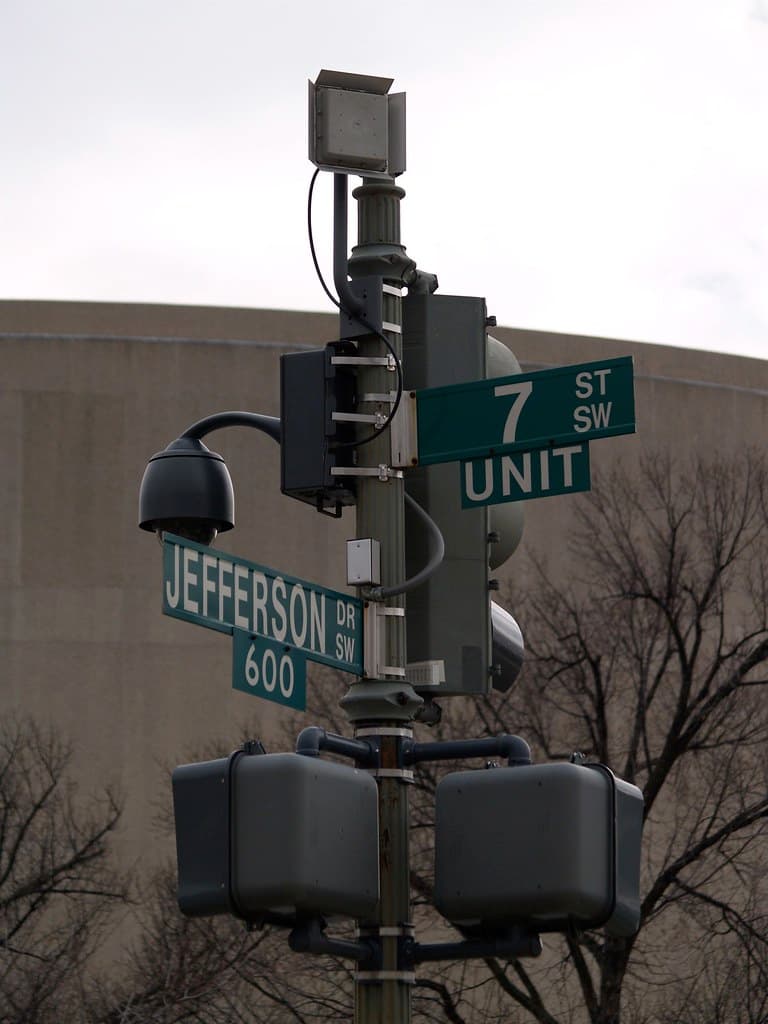
ShotSpotter (made by SoundThinking) mounts acoustic sensors on poles and buildings to detect what may be gunfire and send police a location. Detroit first activated it in 2021 and expanded it in 2022. On June 30, 2026, Council approved a nine-month, roughly $2 million extension — a bridge that keeps the system running through March 31, 2027 while the city reviews proposals for a longer-term system.
The city issued a request for proposals in early 2026 and received three bids: the incumbent SoundThinking, Motorola Solutions, and Eagle Protection. DPD leadership has said the market has changed since 2021, when ShotSpotter was effectively the only option. A future system could also expand coverage into new areas.
The case supporters make
Supporters describe ShotSpotter as a way to get help to victims faster, especially when no one calls 911. At the June hearing, a mother said the technology helped officers reach her 7-year-old son after he was shot. Some community-violence-intervention leaders spoke in favor, describing it as one tool among many.
Police leadership credits the system with helping locate victims and contributing to a historic drop in violence: the city reported record-low homicides in 2025, which it attributes to a mix of community policing, community violence intervention, and technology including ShotSpotter. The Chief has cited hundreds of arrests tied to alerts.
Does it actually work?
This is where the record turns hard for the program. Peer-reviewed research on Detroit's first deployment found that of 5,853 alerts, just two — 0.03% — led to an arrest. City data for 2024–25 tells a similar story: of some 24,225 alerts, shell casings were recovered after roughly 12%, a witness was located after about 2%, and aid reached a victim after fewer than 1%. A University of Michigan study found the one measurable effect — an early drop in 911 gunshot reports — faded after about a year, with no measurable change in response time or shootings.
The city's own numbers have also moved. Publicly, the Chief cited 256 arrests at one briefing and 78 at another; a council member put the arrest rate at 2–3% of alerts. When the results used to justify a contract shift depending on the room, independent verification stops being optional.
The goal here isn't to be for or against. It's to make sure the decision is made in the open — with the results on the table.
What happens after a ShotSpotter alert
Of roughly 24,225 ShotSpotter alerts Detroit police responded to in 2024–25, few produced a tangible result. Separately, peer-reviewed research on the city's first deployment found just 0.03% of alerts led to an arrest. The bars are honest: this is how small each share is.
Source · Detroit Police data (2024–25); Wong & Ramjee, under peer review
What the contract actually requires
Detroit's ShotSpotter contract — signed October 2022 and read in full from the city's own public records — sets three performance standards SoundThinking must hit: locate 90% of outdoor gunfire within 25 meters, review 90% of incidents within 60 seconds, and keep 99.9% system uptime. The accuracy formula only counts a shot the system found and correctly placed. It says nothing about, and charges nothing for, an alert sent for gunfire that was never there.
The penalty for missing the standards is close to nothing. Fall short on two of the three in a given quarter, and the city is owed “one free week of service” — credited not now, but at a future renewal. No refund. No fee reduction. No cost tied to how many alerts turn out to be false.
The contract also directs SoundThinking's review center to push uncertain detections forward — labeled “Probable Gunfire” — to dispatch, patrol computers, and officers' phones rather than hold them back. A system built to err toward reporting, paired with a fee structure that never charges for being wrong, is close to the exact mechanism a 2024 New York City Comptroller audit found in that city's ShotSpotter contract, which had no financial penalty for an 80–92% unconfirmed-alert rate. Detroit's contract isn't identical — it does specify an accuracy target the NYC audit found lacking there — but on the question that decides the incentive, whether being wrong costs the vendor anything, the answer here is the same one New York got: no.
When Council pushed on price in 2026, the city said SoundThinking declined to renegotiate the underlying terms at all — only the price and length of the extension were on the table. The performance clauses now running through March 2027 are the ones the company wrote in 2022, and no public hearing on this contract has discussed them.
The contract has an accuracy target. It just doesn't charge for missing it.
The official at the center
One person connects the grant program and the technology. Todd Bettison built Detroit's ShotStoppers community-grant program as Deputy Mayor in 2023 — selecting the grantees and writing the rules. In 2025 he became Chief of Police, the department that operates ShotSpotter, and he is now the technology's most prominent champion and the source of the arrest figures used to defend it.
In fairness to the record: as Deputy Mayor he was not the official who pushed the 2022 ShotSpotter expansion through Council — that was then-Mayor Mike Duggan and then-Chief James White. But the overlap now is real. The same person who designed the community-investment alternative to surveillance leads the department buying the surveillance — and vouches for its results. When one office shapes both the grants and the technology, independent oversight matters more, not less.
The person who built the alternative to surveillance now runs the department selling it.
Who spoke — and a question about disclosure
Some of the most visible community support for renewal came from Live In Peace, led by Pastor Maurice "Mo" Hardwick. Live In Peace is one of seven groups paid through the city's ShotStoppers program — a community-violence-intervention effort funded at up to $1.4 million per group per year. Notably, ShotStoppers was created as the community-investment alternative many residents asked for instead of surveillance technology. A member of the Board of Police Commissioners also testified in support.
To be clear about what this is and isn't: the ShotStoppers grants are tied to reducing violence, not to supporting any technology, and no rule bars a resident or an appointee from voicing a policy view. But these funding and oversight relationships were not disclosed at the podium. Some residents argue that when people paid or appointed through the city's public-safety system speak on a related contract, that connection should be stated plainly — so the public can weigh the testimony with full context.
A vendor leaning on a few big cities
New York City alone was about 29% of SoundThinking's 2025 revenue. Chicago — previously around 10% — dropped ShotSpotter in 2024. Losing a few large contracts puts real pressure on a company that posted a $9.4M loss.
Source · SoundThinking 2025 annual report (10-K)
Different cities, the same small number
Each city measured something slightly different — an arrest, recovered evidence, a confirmed shooting — but wherever an outside review checked ShotSpotter's own numbers, the share holding up was small. Every figure here comes from that city's own police data or a public inspector general's review.
Source · Chicago OIG (2021); Bolts Magazine (Dayton); NOLA.com (New Orleans); Wong & Ramjee, under peer review (Detroit)
The list keeps growing
At least six major cities have canceled or declined to renew ShotSpotter since 2016, each after its own cost or performance review — this is a partial list, limited to cases with a confirmed public source. New Orleans repeated the cycle, declining in 2023 and resuming in 2025 — a reminder these decisions aren't always final in either direction.
Source · Spectrum News; South Side Weekly; Government Technology; Bolts Magazine; NOLA.com; Chicago OIG/ABC7
A company running out of cities
The company behind ShotSpotter is shrinking, though not vanishing — SoundThinking (NASDAQ: SSTI) still reported 319 customers and 178 cities under contract at the end of 2025. But it also reported a $9.4 million net loss, its market value has fallen roughly 38%, and its annual report discloses a "material weakness" in internal financial controls. It is heavily concentrated: New York City alone accounts for about 29% of revenue — and New York's Comptroller declined to register the NYPD's renewal in 2025 over procurement-rule concerns, not a full cancellation.
The list of cities walking away keeps growing, each for its own documented reason. Charlotte-Mecklenburg canceled in 2016 after a police major told local reporters the department "very few" times actually located the shooter, for $180,000 a year. San Antonio let its contract lapse in 2017; police confirmed no arrests were made from detections afterward. Fall River, Massachusetts ended its deal in 2018 — the mayor said the city wasn't paying $120,000 a year "for something that works less than 50 percent of the time," after the system missed every shot in a fatal shooting months earlier. Dayton, Ohio didn't renew in 2022, after fewer than 2% of its deployments produced an arrest across three years and roughly $615,000 spent. New Orleans declined to convert an 8-month pilot into a contract in 2023 — one arrest from 1,399 alerts — though it resumed use in 2025, a reminder these decisions aren't always final. Chicago decommissioned the system in 2024 after its Inspector General found only 9.1% of alerts produced evidence of a gun-related offense; Durham, Winston-Salem, Syracuse, and Toledo have also moved on; Houston's mayor called it "a gimmick."
Detroit is renewing against that tide — and, in doing so, helping keep a struggling vendor afloat.
None of this settles the Detroit question on its own — supporters note local conditions differ and that violence fell in 2025. But it belongs in the record as the city weighs a long-term path.
Voices
“If it wasn't for the ShotSpotter, my 7-year-old son would be dead.”
LaKeisha Brooks
Detroit resident, mother of a shooting survivor
ClickOnDetroit, Jun 2026 ↗“Who would know better about a ShotSpotter than the Shot Stoppers?”
Maurice “Mo” Hardwick
Pastor, Live In Peace (a city ShotStoppers grantee)
FOX 2 Detroit, Jun 2026 ↗“Invest in people and relationships, not in expensive algorithms.”
Victoria Camille
Detroit Police Commissioner, District 7
BridgeDetroit, Jun 2026 ↗“We can't provide oversight about something if we don't know what it is.”
Linda Bernard
Detroit Police Commissioner
Governing / Michigan Advance, Dec 2025 ↗Questions worth asking
Good questions for a good decision
- 01
Does the system produce enough confirmed results — arrests, evidence, victims reached — to justify ~$2M a year?
- 02
How many arrests has ShotSpotter actually produced, and why have the publicly cited figures varied?
- 03
Will the city complete the surveillance-transparency review the appeals court said was skipped?
- 04
Should groups paid by the city, or appointees, disclose those ties when they testify on a related contract?
- 05
What will the DPD–University of Michigan review examine, who funds it, and will it be independent?
- 06
Could the same money do more through community violence intervention or other investments?
What a strong, open process looks like
Shared ground most people can agree on
Complete and publish the Surveillance Technology & Safety review the CIOGS ordinance requires, as the court directed.
Release the underlying performance data — alerts, evidence recovered, victims aided, arrests, charges — so the public can judge results independently.
Ask people paid or appointed through the city's public-safety system to disclose those ties when they testify on related contracts.
Ensure the promised academic review is genuinely independent, with a named funder, scope, and timeline.
Dates & decision points to watch
Mar 2021
ShotSpotter is first activated in Detroit.
Oct 2022
Council approves a $7M expansion in a 5–4 vote, funded from the general fund after residents objected to using COVID relief.
Oct 2025
Michigan Court of Appeals finds earlier contracts violated the CIOGS surveillance-transparency ordinance.
Jun 30, 2026
Council renews the contract 5–4, through March 31, 2027, while it evaluates long-term bids.
Thursdays, 3pm
The Board of Police Commissioners meets weekly — a place to follow the conversation and comment.
Primary sources
- BridgeDetroit — ShotSpotter extension approved (Jun 2026)
- ClickOnDetroit — 9-month extension, 5–4 (Jul 2026)
- ClickOnDetroit — appeals court sides with residents (Oct 2025)
- The Conversation — is ShotSpotter effective (Wong & Ramjee)
- City of Detroit — Community Violence Intervention / ShotStoppers
- Governing / Michigan Advance — oversight without knowing where sensors are (Dec 2025)
- The Trace — cities paying for gunshot tech they may not need (Dec 2024)
- NYC Comptroller — declines to register ShotSpotter renewal (Feb 2025)
- Chicago OIG — alert-to-evidence rate (2021)
- Spectrum News — Charlotte-Mecklenburg cancels ShotSpotter (2016)
- South Side Weekly — San Antonio, Chicago, San Diego, Indianapolis contract lapses
- Government Technology — Fall River ends ShotSpotter (2018)
- Bolts Magazine — Dayton doesn't renew (2022)
- NOLA.com — New Orleans pilot, one arrest, no renewal (2023)
- SoundThinking (NASDAQ: SSTI) — 2025 annual report (10-K)
- City of Detroit — ShotSpotter contract No. 6004334 (Oct 2022, via eScribe)
Every claim on this page links to its source. Some figures come from reporting that should be re-confirmed against primary records before a public hearing — we'd rather you verify than trust us. If you find an error, tell us and we'll fix it.
Show up when it counts
Decisions get made in rooms.
We'll tell you which room, and when.
The most powerful thing a resident can do is be present before the vote. Subscribe and we'll email you ahead of every City Council session, Police Commissioners meeting, and public hearing that shapes our city.